
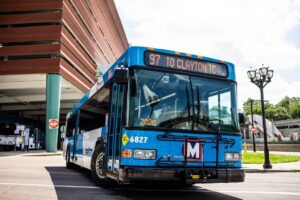
If you were injured on MetroBus, MetroLink, or Metro Call-A-Ride in Missouri, you are typically dealing with Metro (operated by Bi-State Development)—a public entity created by interstate compact—so your claim must be handled with speed, evidence preservation, and an understanding of sovereign immunity rules.
Call RIGHT NOW and speak with a lawyer for FREE at 314-863-0500.
Our attorneys are standing by to take your call. Don’t Wait! Waiting only hurts your case! The sooner you call us, the sooner we can help you!
How To File A Claim With Metro Transit
To file an injury claim with Metro Transit in Missouri, you should: (1) report the incident and get an incident/case number, (2) get medical care immediately, (3) gather identifying details (route, vehicle number, operator name, location, witnesses), (4) send a written claim notice to Bi-State Development/Metro and demand preservation of video and records, and (5) consult a lawyer promptly because Metro is a public entity and sovereign immunity rules and damage caps may apply.
Step 1: Confirm Who “Metro Transit” Is in Missouri (St. Louis Region)
In the St. Louis region, Metro is operated by Bi-State Development (Bi-State Development Agency d/b/a Metro), which administers MetroLink, MetroBus, and Metro Call-A-Ride across the Missouri–Illinois metro area.
That matters because public-entity rules can change how claims are evaluated, what defenses are raised, and what caps may apply.
Step 2: Do the Immediate “Evidence + Medical” Checklist (Same Day If Possible)
A. Get medical care immediately
Even if you think you’re “fine,” transit injuries commonly involve delayed symptoms (concussion/TBI, neck/back injuries, internal issues). Treatment also creates a medical record linking the injury to the event.
B. Report the incident right away and document the report
Before you leave the scene (or as soon as you can):
-
Tell the operator and request a supervisor/Metro Public Safety if needed
-
Ask how to obtain the incident report number
-
Record the time, location, and what happened in your phone notes
Metro publishes a main switchboard and public safety contact numbers for the St. Louis system: Main Switchboard 314-982-1400 and Metro Public Safety Department 314-289-6873 (phone) / 314-300-0188 (text). Metro Transit – Saint Louis
C. Collect the “must-have” identifiers
These details often determine whether you can later force the right records and video:
-
Vehicle number (bus number / train car number), route number, direction of travel
-
Station name (if MetroLink), stop ID (if bus stop), platform location
-
Operator name and badge/ID (if known)
-
Exact time (to the minute, if possible)
-
Names and numbers of witnesses (passengers, bystanders)
D. Photograph and video everything
-
Scene: doors/steps/platform gap, wet floors, broken pavement, malfunctioning doors, etc.
-
Your visible injuries (bruising evolves; take daily photos for a week)
-
Your shoes (footwear becomes evidence in slip/fall cases)
-
The vehicle and any signage
Call RIGHT NOW and speak with a lawyer for FREE at 314-863-0500.
Our attorneys are standing by to take your call. Don’t Wait! Waiting only hurts your case! The sooner you call us, the sooner we can help you!
Step 3: Identify the Legal “Theory” of the Claim (Because Metro Is a Public Entity)
Under Missouri law, sovereign immunity remains in effect for public entities except where it is expressly waived. Missouri’s statute provides two key waiver categories:
-
Injuries directly resulting from negligent operation of motor vehicles by public employees in the course of employment
-
Injuries caused by a dangerous condition of a public entity’s property, if the plaintiff can prove the statutory elements (dangerous condition, causation, foreseeability, and notice or creation).
Missouri’s statute also defines “public entity” to include multistate compact agencies approved by Congress—relevant because Metro is an interstate compact entity.
Typical Metro injury scenarios and the likely category
-
MetroBus collision with another vehicle → often “negligent operation” (motor vehicle waiver)
-
Bus sudden stop / passenger fall inside → may still be “operation” depending on facts
-
Slip/trip on station platform, stairs, elevator, parking area → often “dangerous condition of public property”
-
Door malfunction / equipment failure → can fall into dangerous condition or negligent operation depending on mechanism
-
Assault/crime on Metro property → fact-specific, often heavily defended; requires immediate legal review
Step 4: Understand Damage Caps and Why They Affect Claim Strategy
A. Damage caps can apply to public entities (including Metro)
Missouri’s damages cap statute for public entities is RSMo 537.610, and the Missouri Supreme Court has applied the statutory cap to a verdict against Bi-State Development Agency d/b/a Metro, reducing an award to comply with the cap.
B. Caps are adjusted annually
RSMo 537.610 provides that the limitation is increased or decreased annually and published in the Missouri Register.
The Missouri Register published limits effective January 1, 2025 as:
-
$517,306 for any one person in a single accident/occurrence
-
$3,448,710 for all claims arising out of a single accident/occurrence Missouri Secretary of State
Because these limits are adjusted annually, your applicable cap depends on the date of the occurrence and the most current published limits.
C. Punitive damages are not available against the public entity
RSMo 537.610 states that awards against a public entity within scope do not include punitive or exemplary damages.
Practical takeaway: If Metro is a capped defendant, your case value may depend heavily on identifying all other liable parties (e.g., a negligent private driver, contractor, or third party) and stacking insurance coverage appropriately.
Step 5: Send a Written Claim Notice to Bi-State/Metro and Demand Evidence Preservation
Metro claims are won with documentation. Even if you also communicate by phone, you should create a paper trail.
Where to send your claim notice
Bi-State Development lists its headquarters address and main phone number as:
Bi-State Development, One Metropolitan Square, 211 North Broadway, Suite 700, St. Louis, MO 63102-2759, 314-982-1400.
Best practice: Call the main switchboard and ask for Risk Management/Claims and the correct delivery method (mail/email/fax), but still send a written notice to the headquarters address if you cannot obtain a direct claims intake address immediately.
What your written notice should include
-
Your full name, address, phone, email
-
Date/time of incident
-
Exact location (route/station/platform)
-
Vehicle number / route / operator name (if known)
-
How it happened, in simple factual language
-
Injuries and treatment to date (no exaggeration, no guessing)
-
Witness names and contact info
-
Photos you have
-
A preservation demand for all video/records/data relating to the incident
Sample “Notice of Claim + Preservation Demand” (template)
You can adapt this exactly:
RE: Injury Claim / Evidence Preservation Demand – [Your Name], [Date of Incident]
To: Bi-State Development Agency d/b/a Metro (Risk Management/Claims)
Address: One Metropolitan Square, 211 N. Broadway, Suite 700, St. Louis, MO 63102-2759
I am providing formal notice of an injury incident involving Metro on [date] at approximately [time] at [exact location/station/stop]. I was injured when [brief factual description]. The Metro vehicle involved was [bus/train number] on route [route] traveling [direction]. The operator was [name/description if known]. Witnesses include: [names/contacts].
Please preserve and do not destroy, overwrite, or alter any evidence related to this incident, including but not limited to:
-
All video footage (vehicle cameras, platform/station cameras, nearby facility cameras) for 60 minutes before through 60 minutes after the incident;
-
All incident reports, supervisor notes, operator statements, and internal communications;
-
Any maintenance/inspection records relevant to the area/equipment involved;
-
Any dispatch/operations logs relevant to the vehicle and timeframe.
Please confirm the claim reference number, the claims adjuster assigned, and the preferred method for submitting supporting documentation and medical bills.
Sincerely,
[Name]
[Contact info]
Step 6: Request Records (Incident Reports, Video, 911/Police Reports)
A. Ask Metro for the incident report and any available video
Start with the switchboard and ask where claims or incident records are handled: 314-982-1400.
If there is a safety/emergency component, use Metro Public Safety contacts.
B. Use the Missouri Sunshine Law when applicable
If the record you need is held by a Missouri public governmental body, a Sunshine request may be available. The Missouri Attorney General’s office provides sample Sunshine request language and notes that a custodian of records must respond as soon as possible, but no later than three business days after receiving the request.
Sample Sunshine request language (short form):
“This is a request for records under the Missouri Sunshine Law, Chapter 610, RSMo. I request records relating to [incident], including
, for [date/time range].”
Important: record access, exemptions, and costs can vary; a lawyer can help target the request so you get what matters fastest.
Step 7: Know Your Filing Deadlines (But Don’t Use the Deadline as an Excuse to Wait)
Even if you technically have time to file suit, evidence is on a much shorter clock.
A. General Missouri personal injury limitations
Missouri’s five-year statute (RSMo 516.120) applies to “any other injury to the person or rights of another” not otherwise enumerated.
B. Wrongful death limitations
Wrongful death actions must be commenced within three years under Missouri law.
Critical: Public-entity cases can involve additional procedural issues and defenses. The safest approach is immediate legal action to preserve evidence and lock down liability.
Call RIGHT NOW and speak with a lawyer for FREE at 314-863-0500.
Our attorneys are standing by to take your call. Don’t Wait! Waiting only hurts your case! The sooner you call us, the sooner we can help you!
What NOT to Do When Metro’s Insurer Calls You
In public transit claims, it is common for adjusters to contact victims early. Protect yourself:
-
Do not give a recorded statement without counsel
-
Do not sign medical authorizations that allow fishing through your entire history
-
Do not accept “quick money” while you’re still treating
-
Do not guess about speed, timing, or fault—stick to what you know
If you need to communicate, keep it short:
“I’m receiving medical care. Please communicate through my attorney.”
FAQs: Filing a Claim With Metro Transit in Missouri
Do I have to report the incident to Metro to make a claim?
You should. A documented report plus an incident number strengthens your case and helps locate video and records.
Is Metro considered a “public entity” in Missouri?
Yes—Missouri’s sovereign immunity statute defines “public entity” to include multistate compact agencies approved by Congress, and the Missouri Supreme Court has treated Bi-State/Metro as a public entity for sovereign immunity purposes.
Are damages capped in Metro injury cases?
They can be. Missouri’s public entity cap statute (RSMo 537.610) applies, and the Missouri Supreme Court has reduced a Metro verdict to comply with the cap.
What if a private driver caused the crash with the Metro bus?
That’s a major reason to hire counsel quickly—private defendants may not have the same caps, and multiple insurance policies may apply.
What if my injury happened on the Illinois side of the Metro system?
Because Metro operates across Missouri and Illinois, the location of the incident can affect which state’s law applies. Get legal advice immediately to avoid procedural mistakes.
Bottom Line: The Claim Is Not “Just Paperwork”—It’s a Race for Proof
Metro and its insurers will defend these cases aggressively, and your leverage depends on preserving video, reports, and witness evidence early—especially because Metro is a public entity and sovereign immunity rules and caps may apply.
Call RIGHT NOW and speak with a personal injury lawyer for FREE at 314-863-0500. Our attorneys are standing by to take your call. Don’t Wait! Waiting only hurts your case! The sooner you call us, the sooner we can help you!



 Site by Consultwebs.com: Law Firm Website Designers/Personal Injury Lawyer Marketing.