
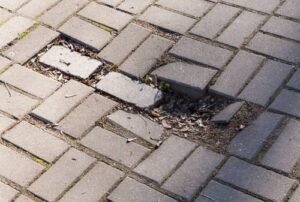
Yes, you may be able to sue the City of St. Louis if a dangerous sidewalk condition caused your injuries and the evidence establishes the City’s legal responsibility. However, Missouri law requires written notice to the mayor within 90 days for claims involving a defective city sidewalk. The notice must identify where and when the injury occurred, describe the injury and circumstances, and state that you will claim damages from the City. Missing this requirement can prevent your lawsuit from proceeding.
Injured on a broken or uneven sidewalk? Call Sansone & Lauber at 314-863-0500 or request a free consultation. Have an attorney evaluate the location, responsible parties, and notice requirements promptly.
What Must I Prove After a St. Louis Sidewalk Fall?
A fall on a public sidewalk does not automatically make the City liable. You need evidence connecting a dangerous condition to your injuries and establishing a legal basis for holding the City responsible.
Government immunity and municipal liability rules affect these cases. Where the dangerous-public-property exception under Missouri Revised Statutes § 537.600 applies, the required showing includes:
- Dangerous property: The public entity’s property was in a dangerous condition when you were injured.
- Direct causation: That condition directly caused your injury.
- Foreseeable harm: The condition created a reasonably foreseeable risk of the kind of injury you suffered.
- Creation or notice: A public employee negligently created the condition within the scope of employment, or the public entity had actual or constructive notice early enough to take protective measures.
The appropriate liability theory depends on the property, the City’s role, and the circumstances.
For example, a raised sidewalk slab that caused your foot to catch requires investigation into the defect, its duration, prior complaints, repairs, and who controlled that location.
What Is the 90-Day Notice Requirement?
Missouri Revised Statutes § 82.210 requires written notice to the mayor within 90 days of an injury involving a defective St. Louis sidewalk. This is separate from filing a lawsuit.
The notice must communicate:
- Where: The location of the accident.
- When: When the injury occurred.
- What happened: The character and circumstances of the injury.
- Your claim: That you intend to seek damages from the City.
Have an attorney prepare and properly deliver the notice, with proof of compliance. Do not wait until medical treatment ends to address this requirement.
Does reporting a broken sidewalk count as legal notice?
Do not assume a repair request, service complaint, telephone call, or incident report satisfies the statutory notice requirement. Reporting a hazard and giving legally sufficient notice of an injury claim serve different purposes.
In Sender v. City of St. Louis, the Missouri Supreme Court addressed this notice statute after an injury on a Forest Park bike path. The case illustrates that both the location covered by the statute and the adequacy of notice can become contested issues.
What Should I Do After Falling on a St. Louis Sidewalk?
1. Get medical care
Obtain appropriate treatment and tell the provider how the fall happened. Describe your symptoms accurately and follow treatment recommendations.
Keep discharge instructions, medical bills, appointment records, and work restrictions.
2. Record the exact location
“Near downtown” or “outside a store” may not provide enough detail to investigate.
Document:
- The nearest street address.
- The intersection and side of the street.
- Nearby businesses or recognizable landmarks.
- The specific slab, hole, curb, or damaged section.
- A map pin as additional location evidence.
3. Photograph the defect and surrounding area
If you can safely do so, take close-up and wide-angle photographs showing:
- Raised or sunken concrete.
- Holes, gaps, or crumbling pavement.
- Construction barriers or missing warnings.
- Lighting and visibility.
- The route you were walking.
- Your visible injuries and footwear.
Include a measurement reference if practical and safe. Do not alter the condition to create a photograph.
4. Identify witnesses and nearby cameras
Collect witness names and contact information. Note nearby businesses, residences, or vehicles that may have recorded the fall.
Request preservation promptly. Do not assume footage will remain available indefinitely.
5. Preserve records of your losses
Save:
- Medical bills and treatment records.
- Proof of missed work and lost earnings.
- Receipts for injury-related expenses.
- Photographs and original video files.
- Correspondence about the incident.
- Notes describing pain and activity limitations.
6. Contact an attorney about the notice deadline
Explain immediately that the fall involved a potentially public sidewalk in the City of St. Louis.
A St. Louis slip-and-fall lawyer can evaluate the potential defendants, investigate the defect, and determine which notice and filing requirements apply.
Is the City Always Responsible for the Sidewalk?
No. The location and control of the walkway must be investigated. A sidewalk near a business may involve public property, private property, a contractor’s work, or another entity’s responsibilities.
Potential parties to investigate include:
- The City or another public entity.
- A private property owner.
- A business controlling the area.
- A construction or repair contractor.
- A utility company whose work affected the walkway.
Being next to a sidewalk does not, by itself, establish a property owner’s liability. Likewise, a maintenance obligation does not automatically resolve who owes damages to an injured pedestrian.
Property records, permits, contracts, maintenance history, and evidence of who created the hazard can help identify the correct defendants.
What if the fall happened in St. Louis County?
Confirm the actual municipality and property owner. A mailing address that says “St. Louis” does not establish that the City of St. Louis controls the location.
Different public entities and municipalities may have different legal requirements. Give the attorney the precise accident location.
What Evidence Helps Establish the City Knew About the Hazard?
Evidence worth investigating includes:
- Earlier complaints about the same defect.
- Inspection reports.
- Repair requests and work orders.
- Photographs showing the condition over time.
- Witness accounts about how long the defect existed.
- Records of City work at the location.
A complaint made after your fall may document the condition, but it does not by itself prove the City knew about the hazard beforehand.
Your attorney can investigate whether the evidence supports actual knowledge, constructive notice, or creation of the dangerous condition.
What Compensation Can I Seek?
Depending on liability and your documented injuries, a sidewalk injury claim may seek compensation for:
- Medical expenses: Emergency care, surgery, rehabilitation, and medication.
- Future care: Treatment supported by medical evidence.
- Lost income: Earnings lost during recovery.
- Reduced earning ability: Lasting effects on your ability to work.
- Pain and suffering: Physical pain and injury-related limitations.
- Permanent impairment: Continuing disability or loss of function.
Are damages against the City capped?
Statutory limits can apply to public-entity claims within Missouri’s sovereign-immunity framework. Section 537.610 provides limits that are adjusted annually and excludes punitive damages for claims within its scope. An attorney should determine whether those limits govern your particular claim and which amount applies.
Do not assume that a settlement or verdict against a private business predicts what can be recovered from a public entity.
What Mistakes Can Hurt a Sidewalk Injury Claim?
Avoid these common problems:
- Waiting to address notice: Medical recovery may continue beyond the notice period.
- Identifying the wrong location: The exact defect must be distinguishable from nearby pavement.
- Assuming a complaint protects your claim: A service request may not meet legal notice requirements.
- Failing to preserve evidence: Repairs or deleted video can make the incident harder to reconstruct.
- Guessing about the cause: Describe what you observed and what you do not know.
- Signing a release too soon: Understand what claims you are giving up before accepting payment.
Frequently Asked Questions
Can I sue for tripping on an uneven sidewalk in St. Louis?
Potentially. You need evidence that the condition caused your injuries and that the defendant is legally responsible. For a defective City sidewalk claim, promptly address the 90-day written-notice requirement.
Is there a minimum sidewalk height difference that guarantees a case?
No measurement alone guarantees a successful claim. Document the size and shape of the defect, visibility, surrounding conditions, and how the fall happened.
What if nobody saw me fall?
A witness is helpful but is not the only possible evidence. Photographs, video, medical records, your account, and maintenance records may help establish what occurred.
Can I still get help if more than 90 days have passed?
Contact an attorney immediately. The missed deadline can create a serious barrier to a City claim, but the attorney should evaluate any notice already given, the applicable rules, and whether another party may be responsible. Do not assume that another defendant’s deadline is the same.
Does the 90-day deadline mean I must file the entire lawsuit within 90 days?
No. The statutory notice requirement and the lawsuit filing deadline are different. Both must be evaluated and satisfied where applicable.
What if the City says a nearby property owner is responsible?
Have that position investigated. Records concerning ownership, control, construction, and maintenance may be needed to determine the proper defendants.
Does Sansone & Lauber offer free consultations for sidewalk injuries?
Yes. Sansone & Lauber offers free evaluations for slip-and-fall injuries and lists public sidewalks among the locations involved in its practice. Call 314-863-0500 to discuss your circumstances.
Injured on a St. Louis Sidewalk? Protect Your Claim Now
A dangerous sidewalk can leave you facing medical bills, missed work, and lasting limitations. A missed notice deadline can prevent you from pursuing the City.
Call Sansone & Lauber at 314-863-0500 or request a free consultation. Provide the accident date, exact location, photographs, and information about your injuries.
Get the responsible parties and deadlines evaluated before more time passes.



 Site by Consultwebs.com: Law Firm Website Designers/Personal Injury Lawyer Marketing.